Mini Split vs. Central Air: Which is Right for Your Seattle Home?
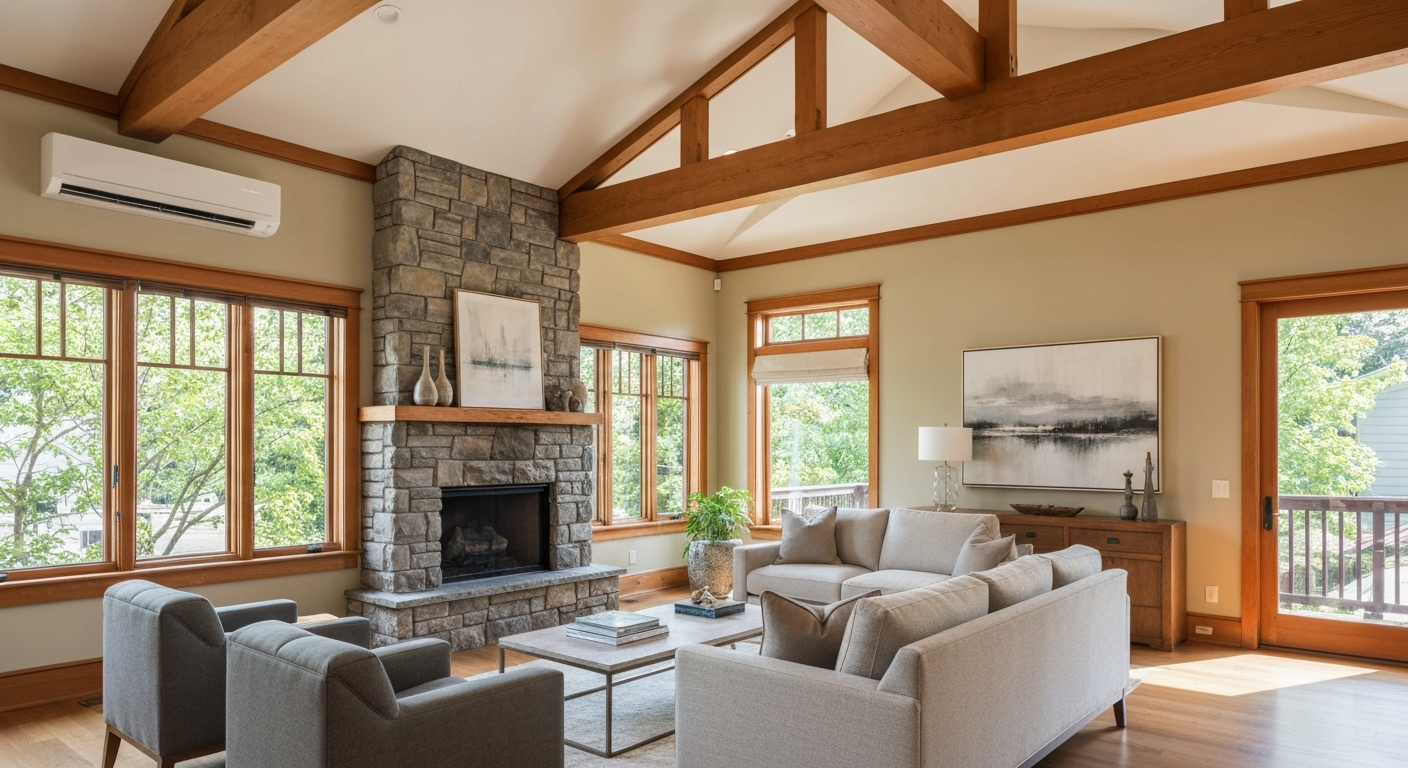
Seattle is unique. Our housing stock ranges from 1900s Craftsman bungalows to mid-century moderns and sleek new-build townhomes — and our climate is unlike any other major U.S. city. This diversity means there is no single "correct" HVAC system. But for most Seattle homes, the answer is increasingly clear: ductless wins.
When homeowners decide to add air conditioning or upgrade their heating, the choice usually comes down to two options: Traditional Central Air (ducted forced-air) or Ductless Mini Split Installation. This guide walks through every important consideration so you can make the right call for your specific home and budget.
The Ductwork Dilemma: Seattle's Biggest HVAC Challenge
This is the single most important factor for the majority of Seattle residents. If you live in a neighborhood like Ballard, Wallingford, Queen Anne, Capitol Hill, or Beacon Hill, there is a very good chance your home was built before ductwork was standard — which means it has none.
- Central Air in a Home Without Ducts: To install traditional central air, you need a complete ductwork system. That means cutting into walls and ceilings, potentially lowering ceiling heights, losing closet or storage space, and a construction project that can take 1–2 weeks. Adding ductwork to a home that doesn't have it is a significant construction project. The mess and disruption are substantial.
- Ductless Mini Splits: As the name suggests, no ducts are required. The outdoor compressor and indoor air handler connect via a refrigerant line that passes through a single 3-inch hole in the wall. Your home's architecture is preserved entirely. There's no drywall repair, no dropped ceilings, and no painter needed when we're done.
For pre-1970 Seattle homes — which represent a significant portion of the city's housing stock — the ductwork comparison alone often settles the debate.
Efficiency and Operating Costs
Even if you do have existing ductwork, the efficiency comparison favors ductless. In a typical forced-air system, an estimated 20–30% of conditioned air is lost through duct leaks, poor insulation around the ducts, and heat transfer as air travels long distances through the system. That's energy you paid for that never reaches the rooms you're trying to heat or cool.
Ductless systems eliminate this loss entirely — 100% of the energy transferred at the outdoor unit reaches the indoor space. Furthermore, mini splits use inverter-driven compressor technology. A traditional central AC operates in a binary on/off fashion: full power on, full power off. An inverter mini split ramps up and down continuously, maintaining your target temperature with minimal energy spikes. This is why modern mini splits often achieve SEER2 ratings of 20–30+, compared to 14–18 for most central systems.
The practical result for Seattle homeowners: lower utility bills, month after month, for the life of the system.
Zoned Comfort: The Feature Central Air Can't Match
Have you ever been in a house where the upstairs bedroom is sweltering in July while the living room is comfortable? That's the inherent limitation of central air: one thermostat, one temperature for the entire house. The system can't distinguish between a sun-drenched south-facing bedroom and a shaded north-facing study.
With a multi-zone mini split system, every indoor unit is independently controlled. Your bedroom can be set to a cool 68°F while the living room stays at 72°F. The guest room, unoccupied all week, can be turned off entirely. This isn't just about comfort — it's a meaningful efficiency gain. You're only conditioning the spaces you're actually using.
For Seattle's warmer summers, which have become noticeably hotter over the past decade, this level of precision control is increasingly important. Rooms with large west-facing windows can now be kept comfortable without overcooling the rest of the house.
Heating Performance: Mini Splits vs. Gas Furnaces in Seattle Winters
Central air systems typically only provide cooling. For heating, most Seattle homes that use central air pair it with a gas furnace. With Washington State's push toward electrification and rising natural gas prices, this combination is becoming increasingly expensive to operate.
A ductless heat pump provides both heating and cooling in a single system, with no combustion involved. Modern heat pumps — particularly Mitsubishi's "Hyper-Heat" line — maintain full heating capacity at outdoor temperatures as low as -13°F. Seattle rarely sees temperatures below 20°F, meaning a properly sized heat pump will handle our winters with ease, at roughly 300–400% efficiency (compared to 100% efficiency for gas or electric resistance heat).
Installation Timeline and Disruption
Installing a full ducted central air system in a home without existing ductwork: 7–14 days minimum, with significant construction work, drywall patching, and painting required afterward.
A standard 3-zone ductless mini split installation by Mark's Mini Splits: one to two days, with no mess, no construction debris, and no follow-up work needed. We arrive, install, and leave your home cleaner than we found it.
Aesthetics and Indoor Unit Options
The most common objection to mini splits is aesthetic — some homeowners don't want visible wall-mounted indoor heads. This is a legitimate consideration. However, ductless technology has come a long way:
- Slim wall-mounted units: Modern units from Mitsubishi and Daikin are sleek and low-profile, measuring just 10–12 inches tall.
- Ceiling cassettes: These mount flush in a drop ceiling and distribute air in four directions — they look like a standard HVAC vent from below and are popular in living rooms and offices.
- Concealed ducted mini splits: These units live in the attic or above the ceiling and connect to traditional-looking supply registers. From inside the room, they are completely invisible.
- Floor-mounted units: Great for rooms with floor-to-ceiling windows or limited wall space.
When Central Air Might Still Win
We'll be straightforward: ductless isn't the right answer for every situation. Central air may be the better choice when:
- Your home already has high-quality ductwork: If you have a newer home with a well-maintained forced-air system, adding a central heat pump or AC coil to existing infrastructure can be very cost-effective.
- You need to condition very large, open spaces: Certain commercial or open-plan residential spaces may be better served by a central system's distribution capability.
When we visit your home for a free assessment, we give you an honest recommendation — not a sales pitch. If central air is genuinely the better fit for your situation, we'll tell you.
The Bottom Line for Seattle Homeowners
For the vast majority of Seattle homes — especially pre-1980 construction without existing ductwork — the ductless heat pump is the clear winner. It's more efficient, dramatically easier and less disruptive to install, provides superior room-by-room comfort control, and qualifies for substantial rebates from Seattle City Light, PSE, and Washington State programs. The long-term operating savings and comfort improvement make it the smartest investment for most homeowners.
Not Sure Which System Fits Your Home?
We evaluate your existing setup and tell you honestly which system will deliver the best performance and value. No pressure, no sales tactics — just expert guidance.
Request a Free System Evaluation